
Releasing Tension Through Muscle Relaxation: Practical, Evidence-Informed Techniques for Stress and Anxiety Relief
Muscle relaxation describes intentional practices that reduce skeletal muscle tension and interrupt the body’s stress response. Progressive Muscle Relaxation (PMR) is one of the most extensively studied methods for doing this. Emerging research shows targeted relaxation lowers sympathetic arousal, strengthens parasympathetic tone, and produces measurable reductions in anxiety, tension headaches, and sleep disruption. This article explains why muscle tension develops, how PMR works both physiologically and psychologically, and how to combine PMR with breathwork, mindfulness, and trauma-informed somatic approaches for more durable relief. You’ll find clear, evidence-informed how-to steps, comparisons of complementary methods, clinical applications (including CBT and somatic models), and practical resources to begin a daily practice. Sections move from causes and mechanisms to step-by-step technique, clinical integration, and a concierge-style approach designed to help high-achieving clients sustain relaxation and resilience.
What Causes Muscle Tension and How Does It Affect Your Body and Mind?
Muscle tension commonly appears when the autonomic nervous system shifts toward sympathetic dominance, preparing the body for action and raising resting muscle tone. Psychologically, chronic worry and unprocessed emotion keep the body in a guarded state and heighten interoceptive alertness. Biologically, repeated exposure to cortisol and catecholamines sensitizes muscle spindles and elevates baseline contractile activity, producing stiffness, loss of range of motion, and pain over time. Behaviorally, poor ergonomics, repetitive strain, and disrupted sleep prevent muscle recovery and amplify vulnerability. Recognizing how these factors interact explains why effective interventions must address nervous-system regulation, cognitive patterns, and daily habits to create lasting relief.
How Does Stress Trigger Physical and Emotional Muscle Tension?
Stress triggers muscle tension through a well-established pathway: perceived threat activates limbic regions, engages the hypothalamic–pituitary–adrenal axis and sympathetic nervous system, and increases motor neuron drive so muscles are primed for action. That response is adaptive in short bursts but becomes maladaptive when stress is chronic, producing persistent low-level contraction in typical areas—neck, shoulders, jaw, and paraspinal muscles—and increasing pain sensitivity. Clinically, people often describe “holding” emotions in specific regions; attending to those areas with interoceptive awareness can reveal emotional meaning and create opportunities for targeted regulation. Recent work links sustained sympathetic tone to worse sleep and greater pain reports, so early nervous-system-focused strategies can limit downstream consequences.
What Are the Long-Term Effects of Chronic Muscle Tension on Well-being?
When muscle tension persists, a cascade of physical and mental health impacts often follows: recurring tension headaches, myofascial pain, disrupted sleep architecture, and reduced functional mobility become more likely. Psychologically, ongoing bodily arousal sustains anxiety, irritability, and a narrowed emotional range, undermining resilience and social attunement. Over months and years, this pattern can increase stress reactivity and raise cardiovascular risk through higher resting heart rate and exaggerated blood pressure responses. These links highlight why early, integrated care—combining relaxation training, cognitive work, and lifestyle adjustments—is important for meaningful recovery.
How Does Progressive Muscle Relaxation Help Release Muscle Tension?
Progressive Muscle Relaxation (PMR) is a systematic practice of tensing then releasing major muscle groups to trigger reciprocal inhibition, sharpen interoceptive discrimination, and engage parasympathetic down-regulation. PMR trains the nervous system to recognize the contrast between tension and relaxation, lowering baseline muscle tone and reducing anxiety through repeated practice and coordinated breathing. In clinical settings, PMR complements interventions that address cognitive triggers and sleep hygiene, making it useful for anxiety, insomnia, and chronic pain. Below we outline step-by-step technique and summarize the typical clinical outcomes supported by the literature.
Efficacy of Progressive Muscle Relaxation for Stress, Anxiety, and Depression in Adults A growing body of studies evaluates relaxation methods; this 2024 systematic review by S. Muhammad Khir summarizes evidence for Progressive Muscle Relaxation in adults with stress, anxiety, and depression.
What Are the Step-by-Step Techniques of Progressive Muscle Relaxation?
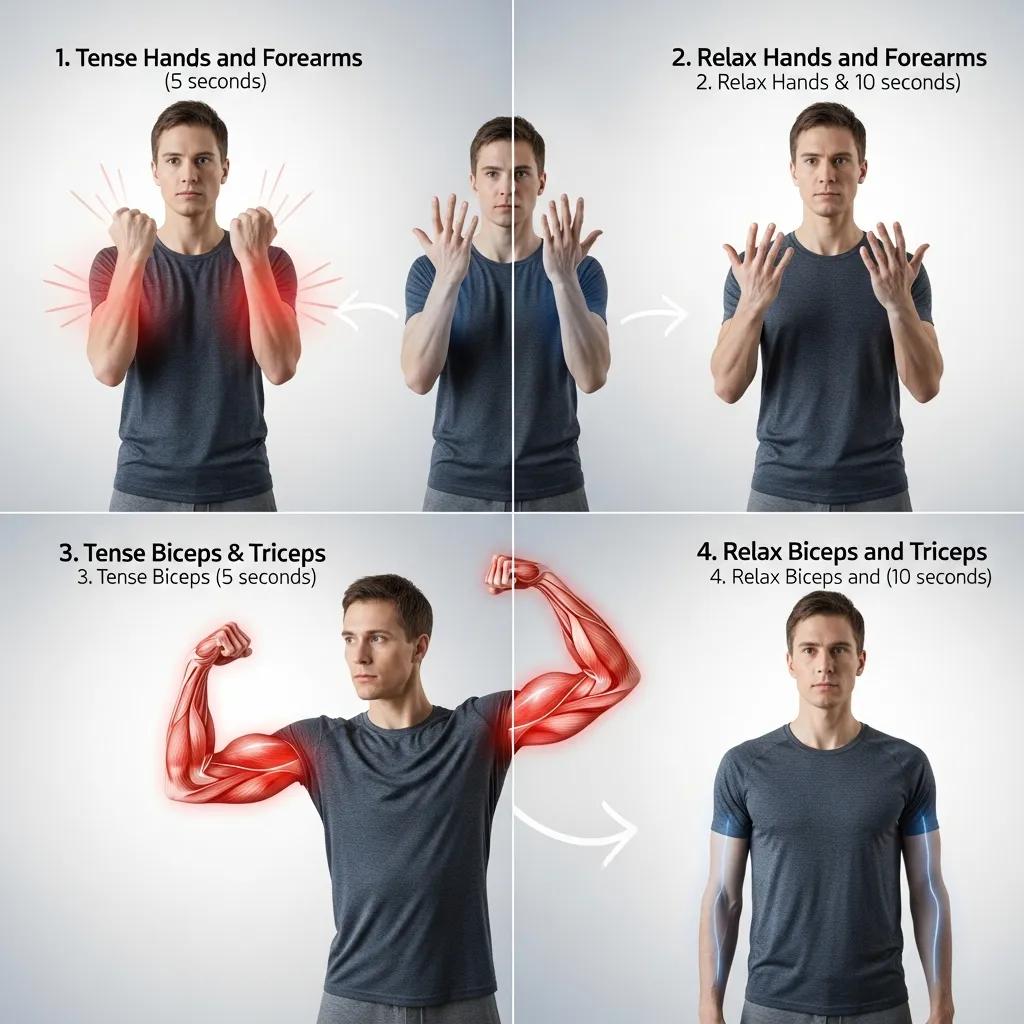
A practical PMR routine follows a consistent sequence of muscle groups, using brief tension followed by longer release intervals to maximize contrast and learning. Start seated or lying comfortably with diaphragmatic breathing, then:
- Feet and calves: Curl your toes and tense the calves for 5–10 seconds, then release for 20–30 seconds.
- Thighs and hips: Squeeze the quadriceps and glutes, hold briefly, then let them fully soften.
- Abdomen and chest: Gently engage the core, then breathe into the release and allow the area to relax.
- Hands, arms, shoulders, neck, face: Make gentle fists, lift shoulders toward the ears, clench the jaw, then release and notice the difference.
Aim for 10–20 minutes per session, once or twice daily. For clients who are hypervigilant, shorten the holds to about 5 seconds and emphasize longer, mindful releases to enhance parasympathetic activation. Troubleshooting options include shortening the sequence, using guided audio, or pairing PMR with grounding exercises if intense sensations occur.
What Are the Proven Benefits of PMR for Anxiety, Sleep, and Pain Relief?
Randomized and controlled studies show PMR reduces subjective anxiety, improves certain sleep-quality measures, and lowers self-reported pain for many people after several weeks of consistent practice. Immediate benefits—reduced heart rate and a felt sense of looseness—can appear after a single session, while clinically meaningful symptom change typically develops over 2–8 weeks of regular use. PMR also increases interoceptive awareness, helping clients detect rising tension early and apply quick regulation strategies, which supports relapse prevention. Clinicians should set realistic adherence goals and pair PMR with behavioral sleep interventions and activity pacing to optimize outcomes.
Different relaxation approaches act through distinct mechanisms. The table below compares PMR with related practices to help clinicians and individuals choose a primary practice and complementary supports.
| Technique | Mechanism | Typical Benefit |
|---|---|---|
| Progressive Muscle Relaxation (PMR) | Tension–release contrast, reciprocal inhibition, interoceptive learning | Lower baseline muscle tone, reduced anxiety, easier sleep onset |
| Diaphragmatic Breathing | Vagal activation, improved heart rate variability | Rapid calming, reduced heart rate, enhances PMR effects |
| Guided Imagery | Cognitive reframing combined with parasympathetic engagement | Supports emotional processing, deep relaxation, lowers pain perception |
| Biofeedback | Objective physiological feedback plus skill learning | Accelerates skill acquisition, measurable reductions in muscle tension |
This comparison shows PMR as a foundational practice, with breathing, imagery, and biofeedback offering complementary mechanisms to accelerate and deepen results.
What Other Stress Reduction Techniques Complement Muscle Relaxation?

Complementary approaches amplify PMR by addressing different components of the stress-response system—breathwork stimulates vagal pathways, mindfulness shifts cognitive reactivity, and movement restores mobility and proprioception. Sequenced thoughtfully, these modalities form a practical toolkit: breathwork prepares the nervous system, PMR reduces muscular tension, and mindfulness or imagery consolidates the calming shift. Below are easy pairings and short cues to integrate into daily life for more durable tension relief.
How Can Deep Breathing and Diaphragmatic Relaxation Reduce Tension?
Diaphragmatic breathing reduces sympathetic drive by stimulating the vagus nerve and increasing heart-rate variability, which in turn lowers muscle tone and perceived stress. A simple pairing with PMR: inhale slowly for 4–6 seconds through the nose, allow the belly to expand, then exhale gently for 6–8 seconds, letting muscles soften on the exhale. Repeat 5–10 cycles before PMR to deepen parasympathetic engagement, or use as a brief midday reset to interrupt rising tension. Regular breath practice links regulation skills with muscular relaxation and strengthens resilience to acute stressors.
How Do Mindfulness and Guided Imagery Support Mind-Body Tension Release?
Mindfulness and guided imagery support PMR by reducing cognitive reactivity and re-framing emotional content connected to bodily tension, helping to prevent rebound tightening after a physical release. A short body scan invites nonjudgmental attention from feet to face—notice sensations without trying to change them—then follow with PMR to create a contrast-based learning experience. Guided imagery uses sensory-rich scenes (for example, imagining warmth and softening in tight areas) to deepen relaxation and facilitate emotional processing. When sequenced—breath, PMR, then imagery—these techniques stabilize nervous-system shifts and promote longer-lasting reductions in both felt tension and its psychological drivers.
| Technique | Best Use Case | Time to Notice Effect |
|---|---|---|
| Diaphragmatic Breathing | Acute anxiety or performance stress | Immediate to a few days |
| Mindfulness/Body Scan | Reducing rumination and preventing tension rebound | Days to weeks |
| Guided Imagery | Emotional processing and deep relaxation | Several weeks with regular practice |
| Yoga/Movement | Restoring mobility and easing chronic tightness | Weeks to months |
Use this table to match technique to your goals: breathwork offers fast relief, mindfulness stabilizes cognition, imagery supports deeper processing, and movement restores function.
How Do Psychological Therapies Enhance Muscle Tension Relief?
Psychological therapies target the cognitive, behavioral, and relational drivers that sustain chronic muscle tension. By integrating skill-building, exposure, and somatic work, therapy produces durable shifts that standalone relaxation practice may not achieve. Evidence-based modalities—CBT for maladaptive thoughts and behaviors, and Somatic Experiencing for trauma-related dysregulation—offer complementary pathways to lower baseline arousal and rebuild regulatory capacity. Below is a summary of how these therapies interface with PMR and when each approach is typically indicated.
How Does Cognitive Behavioral Therapy Address Stress and Muscle Tension?
Cognitive Behavioral Therapy (CBT) reduces muscle tension by restructuring catastrophic or hypervigilant thought patterns that sustain physiological arousal and by promoting behavioral activation to counteract avoidance and deconditioning. CBT commonly integrates relaxation training like PMR into a broader plan that includes cognitive restructuring, graded exposure to interoceptive cues, and sleep and activity scheduling. Progress is measured by reduced avoidance, lower scores on standardized anxiety scales, and objective improvements in sleep and pain. When combined with regular PMR practice, CBT helps convert short-term relief into lasting changes in stress response.
What Role Does Somatic Experiencing Play in Trauma-Informed Tension Release?
Somatic Experiencing (SE) works with felt-sense using titration and pendulation to complete interrupted defensive responses and restore autonomic balance—important for clients whose chronic tension is rooted in trauma. SE stresses careful pacing, attention to subtle somatic shifts, and supporting small nervous-system discharges to avoid re-traumatization. For people with trauma histories, somatic methods are often introduced alongside or after stabilization and with clinician guidance, since generic relaxation exercises can sometimes increase distress if applied without trauma-aware scaffolding. When used skillfully, SE reduces entrenched muscular guarding and frees cognitive and emotional resources for other therapeutic work.
How Does Dr. Lena Agree’s Personalized Concierge Approach Support Lasting Tension Relief?
Dr. Lena Agree, JD, PsyD and Associates offer a concierge psychology model that blends clinical psychotherapy, tailored coaching, and somatic skills training to address both physiological and identity-level patterns that maintain tension in high-achieving clients. The concierge model emphasizes individualized assessment, flexible scheduling, and focused interventions—integrating PMR, diaphragmatic breathing, CBT strategies, and somatic techniques—so busy professionals can embed sustainable practices into demanding lives. The goal is not symptom suppression but measurable shifts in stress reactivity, performance balance, and overall well-being.
How Is Therapy Customized to Address Individual Stress and Muscle Tension?
Assessment begins with symptom mapping, reviewing functional impact, and identifying lifestyle constraints to create a personalized plan that blends PMR, cognitive strategies, and somatic regulation based on each person’s physiology and goals. Treatment plans include measurable outcomes—sleep quality, pain intensity, daily tension ratings—and iterative adjustments to intensity and scheduling to match client capacity. For high-achievers, customization often includes micro-practices within the workday, pragmatic habit design, and coaching around boundaries and recovery. These tailored plans aim for measurable reductions in tension while preserving performance and productivity.
| Service | Core Component | Client Outcome |
|---|---|---|
| Individual Therapy | Integrated CBT + somatic work | Reduced anxiety and lower baseline muscle tension |
| Coaching for High-Achievers | Habit design and accountability | Sustainable relaxation practices woven into work |
| Personalized PMR-Guided Sessions | Clinician-led PMR plus audio resources | Faster skill acquisition, improved sleep and focus |
This table links services to expected outcomes to show how a concierge model pairs modality with measurable client change. If you’d like personalized integration of PMR into therapy or coaching, a consultation with Dr. Lena Agree can clarify how these offerings would be adapted to your needs and schedule.
How Does Coaching Help High-Achievers Manage Stress and Maintain Relaxation?
Coaching for high-achieving clients focuses on translating therapeutic skills into actionable routines that fit constrained schedules. Coaches emphasize micro-practices, accountability systems, and resilience training to prevent relapse. They identify high-yield moments for short PMR or breathing breaks—before presentations, between meetings, or at transition points—and help build performance-supporting rituals that reduce cumulative tension. Measured outcomes include improved focus, fewer mid-day tension spikes, and sustained practice adherence, which together lower physiological load and support clearer decision-making under pressure. Coaching frames skill implementation so change endures beyond short-term symptom relief.
What Resources and Support Are Available for Releasing Muscle Tension?
Useful resources include clinician-led guided audios, concise PMR scripts, mobile apps for breathing and mindfulness, and referral pathways to physical therapy or biofeedback when structural or pain diagnoses require adjunct care. High-quality materials emphasize progressive learning—short practices for beginners and longer protocols for more experienced users—and prioritize clinician guidance for people with trauma histories. Below are curated resource categories and practical tips to help you choose materials that match your needs and support steady practice.
Where Can You Find Guided Audio and Video Exercises for Muscle Relaxation?
Seek clinician-led PMR recordings, clear scripts, and progressive programs that guide users from brief 5–10 minute sessions to 20-minute full-body protocols to support habit formation and skill generalization. Best practice is short, frequent sessions (5–15 minutes daily) when beginning, then gradually increase duration as comfort and interoceptive tolerance grow. Choose recordings that pair diaphragmatic breathing with tension–release contrast and that permit modifications—shorter holds or extra grounding—for hypervigilant or trauma-affected listeners. Clinician-guided content typically accelerates learning and reduces common barriers such as uncertainty about sequencing or pacing.
- Clinician-led guided audios offer expert pacing and trauma-aware prompts.
- Short daily sessions (5–15 minutes) form habits faster than sporadic long sessions.
- Select progressive programs that increase complexity over several weeks.
These guidelines help you select and sequence media so guided exercises support gradual improvement rather than sporadic relief. For individualized audio or video guides and bespoke coaching to integrate PMR into your work rhythm, Dr. Lena Agree and associates provide tailored options and structured support to accelerate adoption.
What Are Common FAQs About Muscle Tension and Relaxation Techniques?
Frequently asked questions focus on safety, frequency, effectiveness, and when to seek professional help. PMR is safe for most people when introduced gradually, though individuals with trauma histories should use clinician-guided variations or consult a therapist if sensations become overwhelming. For best results, aim for daily practice and track sleep, pain, and anxiety over 2–8 weeks. If symptoms worsen or functional impairment continues, seek professional assessment. Combining PMR with breathing, mindfulness, CBT strategies, or physical therapy usually yields better outcomes than any single approach alone.
- Is PMR safe for everyone?: Generally yes—start gently and consult a clinician if you have a trauma history.
- How often should I practice PMR?: Daily practice of 10–20 minutes yields the most reliable change.
- When should I seek professional help?: If pain or anxiety worsens, or if tension interferes with daily function.
These concise answers offer practical next steps and safety guidance to help readers begin responsibly. For tailored support—downloadable PMR scripts or personalized audio/video guides—consider scheduling a consultation with Dr. Lena Agree to design a plan that fits your physiology and schedule.
Frequently Asked Questions
What is the difference between Progressive Muscle Relaxation and other relaxation techniques?
Progressive Muscle Relaxation (PMR) focuses on sequentially tensing and relaxing muscle groups so you can learn to notice the contrast between tension and ease. Other techniques—like diaphragmatic breathing—emphasize breath control to engage the parasympathetic system, while guided imagery and mindfulness target cognitive and emotional patterns. These methods are complementary: combining them often produces stronger, more durable relaxation than using any single technique in isolation.
How long does it take to see results from practicing PMR?
Many people notice immediate benefits from PMR—lower heart rate and a sense of looseness—after a single session. For more sustained improvements in anxiety, sleep, and pain, consistent practice over 2 to 8 weeks is recommended. Regular short sessions help reinforce the relaxation response and improve interoceptive awareness, which makes it easier to manage stress over time. Setting achievable goals and tracking progress supports adherence.
Can PMR be used alongside medication for anxiety or stress?
Yes. PMR can be used alongside medication for anxiety or stress and is often recommended as a behavioral complement to pharmacologic treatment. It may reduce medication side effects, improve sleep, and provide active self-regulation skills. Always coordinate with your prescribing clinician before changing or combining treatments to ensure a safe, integrated plan.
Are there any specific populations that should avoid PMR?
PMR is generally safe, but certain groups should use caution. People with significant trauma histories may experience heightened distress with standard PMR and should consider clinician-guided or modified versions. Those with acute musculoskeletal injuries or certain neurological conditions should consult a healthcare provider before beginning. Tailoring the approach to individual needs ensures safety and effectiveness.
How can I incorporate PMR into my daily routine effectively?
Carve out quiet moments—ideally 5–15 minutes—to practice consistently. Start with short sessions and increase duration as comfort grows. Pair PMR with diaphragmatic breathing or a brief body scan, and use transition points (before bed, between meetings, or after commute) to make practice habitual. Small, regular efforts are more sustainable and effective than infrequent long sessions.
What resources are available to help me learn PMR?
Look for clinician-led guided audio recordings, clear written scripts, and progressive programs that move from short to longer sessions. Mindfulness and relaxation apps often include PMR exercises. For personalized guidance, working with a therapist or coach who specializes in somatic and relaxation techniques provides tailored pacing and accountability.
Conclusion
Progressive Muscle Relaxation and related muscle-relaxation practices are practical, evidence-informed tools to reduce stress, ease anxiety, and improve sleep and pain outcomes. Understanding the physiological and psychological drivers of tension helps you choose and combine techniques—breathwork, PMR, mindfulness, and somatic approaches—for more lasting relief. If you’d like personalized guidance or a tailored PMR program that fits your schedule and goals, consider scheduling a consultation with Dr. Lena Agree.