
Can Online Therapy Sessions Rival The Intimacy Of In-Person Counseling?
Most of you can build genuine therapeutic intimacy in online therapy when you and your therapist attend to communication, privacy, and facial cues, though certain in-person nuances may remain different.
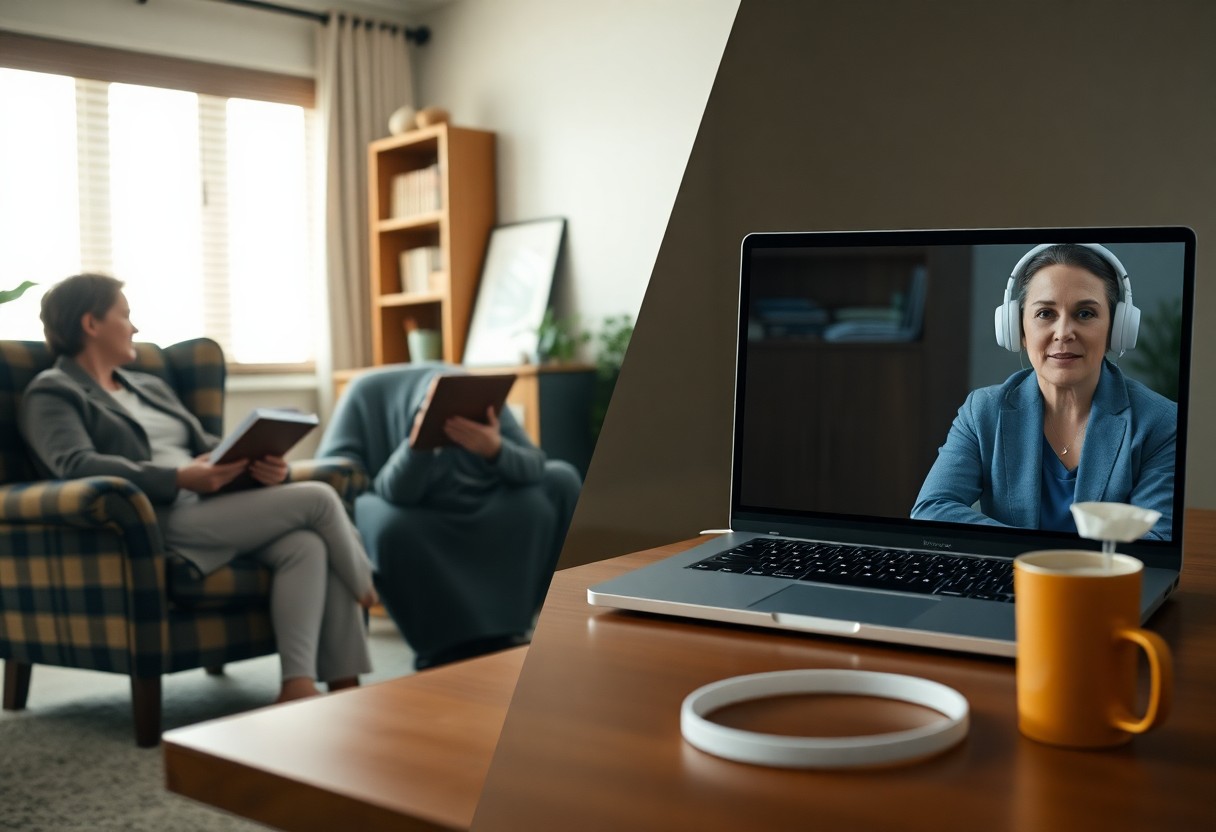
Key Takeaways:
- Research shows strong therapeutic alliances can form in online therapy, producing outcomes comparable to in-person care for many common conditions.
- Video conferencing preserves facial expressions and vocal tone, while subtle body language and physical presence remain limited.
- Increased accessibility and convenience improve attendance and continuity of care by removing travel and scheduling barriers.
- Technical problems, privacy concerns, and uneven internet access can interrupt sessions and reduce effectiveness for some clients.
- High-risk cases, complex assessments, or clients who prefer face-to-face interaction often benefit more from in-person counseling.

Redefining the Therapeutic Alliance in the Digital Age
Therapeutic connection increasingly rests on consistent attunement and intentional rituals, and you can feel held through calibrated tone, pacing, and visible responsiveness even without shared physical space.
The shift from physical proximity to emotional presence
Online sessions ask you to rely more on verbal clarity and explicit check-ins, so your emotional needs are named rather than assumed.
Visuals and audio become the primary channels for affect, and you learn to trust cadence, facial nuance, and intentional silence as markers of presence.
Establishing trust and rapport through a screen
When building rapport remotely, you notice consistency-timely starts, clear boundaries, and reflective summaries-that signals reliability.
Therapists who invite feedback about the medium and name what’s hard on camera help you feel acknowledged and respected.
Body language remains informative, so you can set camera framing and mutual rituals that cue safety, increasing predictability and deepening the alliance.
Analyzing Non-Verbal Cues and Micro-expressions
You can still detect many micro-expressions and subtle facial shifts over video, but reduced resolution, lighting and latency often blunt their clarity, so you must heighten attention to eye movement, jaw tension and micro-pauses in speech.
Limitations of limited field of vision in video conferencing
Video frames commonly cut off hand gestures and posture, which means you miss contextual signals such as fidgeting or closed body language that inform risk assessment and rapport; you should ask clients to widen their camera view when those cues are relevant.
Adapting clinical observation techniques for virtual settings
Adaptation requires you to use targeted questions, structured observation checklists and explicit camera adjustments so you can capture facial detail, hand movement and environmental cues that replace the peripheral information lost on screen.
Practice using brief silent pauses to watch micro-expressions, ask clients for short demonstrations of movement or affect, and obtain consent to record sessions so you can review non-verbal detail and refine your remote diagnostic judgments.
The Impact of Environment on Psychological Safety
Clinic settings often signal professional boundaries and predictable routines that help you feel contained, making it easier to bring up difficult material.
Online sessions place you inside your own environment, which can increase comfort but also expose you to interruptions, so intentional setup matters for psychological safety.
The neutrality of the clinical office versus the home setting
Therapy offices offer neutral decor and consistent rituals that prime you for introspection and reduce the burden on you of self-managing the setting.
Managing privacy and boundaries in a personal space
At home you must assess who can overhear and create visible signals to others so you can speak freely during sessions.
Consider scheduling sessions when others are out and using headphones and white noise so you protect your confidentiality and focus.
Practical steps like closing doors, disabling notifications, and placing a visible cue on the door help you establish clear boundaries between therapy and daily life.
The Online Disinhibition Effect
Online anonymity lowers social guards, so you may disclose faster and with less inhibition than in-person encounters, which can create early therapeutic openings.
That accelerated openness can reveal core themes sooner, but you and your clinician must weigh the speed of disclosure against the need to assess context and safety.
How digital distance can accelerate patient self-disclosure
Distance can reduce fear of judgment, making you more willing to name shameful or stigmatized experiences that might stay hidden face to face.
Many clients use chat pauses or muted video to compose honest statements, so you might arrive at sharper language and clearer emotional insights online.
Balancing rapid intimacy with clinical stability
Clinicians must translate your accelerated intimacy into a steady clinical frame, checking coping capacity and immediate risk before deepening interventions.
Protocols such as distress scaling, explicit safety plans, and agreed pacing help you and your therapist temper intense material so treatment stays effective.
Follow-up measures like between-session check-ins, clarified consent about recordings, and explicit emergency contacts give you additional containment when disclosures escalate quickly.
Comparative Efficacy and Longitudinal Outcomes
Studies comparing online and in-person therapy show comparable short-term symptom reductions across anxiety and depression, while modality-specific differences emerge in engagement and dropout. You should weigh effect sizes alongside clinician training and treatment fidelity when judging equivalence.
Data from longitudinal cohorts indicate sustained benefit depends on consistent follow-up and measurement-based care; you may observe attenuation when sessions lapse or technology interrupts continuity. You can reduce risk by tracking outcomes and adjusting care pathways promptly.
Comparative Efficacy and Longitudinal Outcomes
| Measure | Implication for you |
|---|---|
| Symptom reduction | Similar short-term gains across modalities for common disorders |
| Therapeutic alliance | Video can sustain strong alliance with deliberate relational techniques |
| Retention | Dropout risk higher online without scheduling and tech supports |
| Long-term maintenance | Regular outcome monitoring preserves gains over time |
Measuring patient satisfaction across different modalities
You can assess satisfaction with validated surveys, session-by-session ratings, and targeted interviews to capture perceived empathy, convenience, and outcome alignment. Aggregate results often show parity, though demographics and access shape individual responses.
Assessing the sustainability of deep emotional connections online
Clinicians report that strong alliances form online when you prioritize eye contact, reflective listening, and clear boundaries; consistent session rhythm and explicit emotional checking-in help maintain intimacy despite distance.
Research tracking clients over years finds that long-term emotional bonds persist when you keep predictable scheduling, transparent privacy practices, and collaborative goal-setting; routine measurement highlights ruptures so you can intervene early.
Final Words
Following this you can evaluate whether online therapy achieves the intimacy you need: it often rivals in-person counseling when you and the clinician establish trust, clear boundaries, and reliable technology. You must weigh limitations in nonverbal cues and potential privacy concerns against greater access, convenience, and continuity of care to decide which format best supports your mental health goals.

FAQ
Q: Can online therapy match the intimacy of in-person counseling?
A: Research indicates that online therapy can produce outcomes comparable to in-person therapy for many conditions such as anxiety, depression, and PTSD when both client and clinician engage similarly. Video sessions preserve facial expressions and tone of voice, which support emotional connection, while limitations in full-body cues and physical presence can reduce some nonverbal information. The therapeutic alliance often predicts outcome more than modality, so clinician skill, consistent attendance, and clear communication contribute heavily to perceived intimacy. Clients with access to reliable technology and a private space tend to report higher satisfaction with online sessions. Certain clinical situations, such as acute safety risk or severe psychosis, may still be better managed in-person because of the need for immediate intervention or comprehensive assessment.
Q: What aspects of intimacy change when therapy moves online?
A: Eye contact can feel different on screen due to camera placement, and subtle body language cues are harder to read when only the head and shoulders are visible. Vocal tone, facial micro-expressions, and pauses remain available and often carry most therapeutic content. Physical gestures like comforting touch or handing a tissue are absent, which shifts the work toward verbal empathy and explicit emotional naming. The client environment also affects intimacy: some people feel safer and more open at home, while others struggle to speak freely without a private space. Session pacing may change because of brief technical interruptions or delayed audio.
Q: How can clients and therapists build a strong therapeutic bond in online sessions?
A: Choose a private, quiet room and let household members know session times to reduce interruptions. Test video, audio, and internet connection before the first appointment and have a backup plan, such as a phone call, if video fails. Set clear session boundaries and rituals-opening check-ins, brief grounding at the end-to mirror in-person structure. Therapists should name observations explicitly, ask about bodily sensations, and invite clients to describe what is not visible on screen. Use high-quality cameras and lighting to maximize nonverbal cues, and maintain consistent scheduling and timely communication to reinforce reliability. Consider occasional in-person meetings if both parties agree and if it serves clinical needs.
Q: What technical or privacy issues reduce the feeling of intimacy in online therapy?
A: Unstable internet and dropped calls break emotional momentum and reduce the depth of conversation. Poor camera angle, low resolution, and bad lighting diminish facial cues that support empathy. Lack of end-to-end encryption or use of noncompliant platforms creates privacy risks that can make clients less willing to disclose sensitive material. Household interruptions, thin walls, or shared living situations limit confidentiality and reduce openness. Written informed consent about telehealth limits, emergency procedures, and data security helps clients feel safer and more able to connect.
Q: Which clients or situations are better suited to in-person counseling rather than online therapy?
A: Clients with active suicidal intent, recent serious self-harm, severe psychosis, or unstable medical conditions benefit from in-person assessment and potentially immediate intervention. Young children who need play-based, sensory, or hands-on techniques often respond better to face-to-face methods. Individuals in abusive household situations without a private or safe space for remote sessions may require an in-person alternative or a carefully planned safety protocol. Court-ordered evaluations, certain forensic assessments, and some diagnostic testing also typically require in-person settings. Clinicians should evaluate risk, functional needs, and client preference when deciding modality and consider a blended approach when appropriate.