

How to Build a Vision Board for Manifestation: A Practical, Psychology-Informed Guide
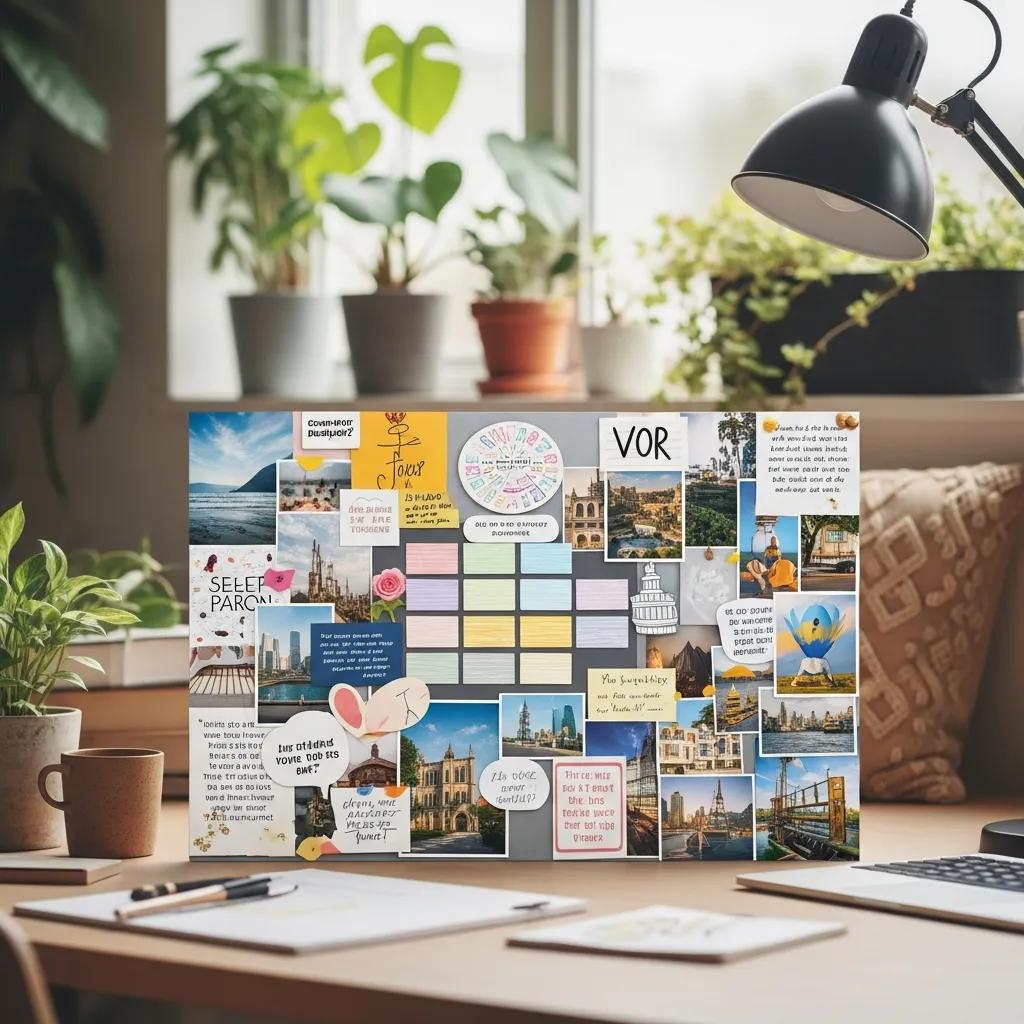
A vision board for manifestation is a deliberate visual collection—images, words, and symbols—that represent specific goals, core values, and desired outcomes. This guide connects psychological principles to practical steps so you can build a board that moves intention into action. Many people struggle to translate aspiration into consistent behavior; by combining visualization, targeted affirmations, and clear next steps, a vision board narrows the gap between wanting and doing. You’ll read what a vision board is, how it influences motivation and self‑belief, step‑by‑step instructions, adaptations for high‑achieving professionals, common obstacles with therapeutic approaches, and maintenance routines to sustain momentum. Throughout, you’ll find evidence‑informed suggestions, ordered checklists, three EAV‑style comparison tables, and adaptable templates for both physical posters and digital boards.
What Is a Vision Board and How Does It Support Manifestation?
A vision board is an intentional arrangement of images, phrases, and symbols that represent your desired future. It supports manifestation by making goals more accessible, emotionally vivid, and easier to plan for. Visual cues in your environment prime attention for goal‑relevant opportunities and make next steps easier to notice and take. The medium matters: a physical board invites tactile rituals and visible progress, while a digital board can be woven into your daily screens for repeated nudges. Research on goal priming and visualization shows that frequent exposure to goal‑consistent images strengthens the pathways from intention to action and boosts self‑efficacy—both of which increase the odds of steady, step‑by‑step change. The section below explains why visual prominence makes a vision board an effective goal‑setting tool.
What Is a Vision Board and Why Is It Effective for Goal Setting?
Vision boards help with goal setting because images plus short, concrete statements make objectives easier to recall and act on. Visually salient items serve as reminders and retrieval cues, turning abstract wishes into proximate, planned actions. For example, a career board that includes a promotion image, a timeline, and a labeled task (like “Update portfolio by April”) translates aspiration into a sequence of actionable steps. Images also speed up emotional engagement—positive feelings attached to visuals reinforce motivation and persistence when challenges arise. That emotional engagement sets the stage for guided mental rehearsal and visualization techniques that increase a board’s effectiveness.
How Does Visualization Enhance Manifestation and Goal Achievement?

Visualization supports manifestation by rehearsing goal‑directed behavior in the mind, which primes the same neural pathways used during actual performance and lowers psychological barriers to action. Brief guided visualizations—rehearsing steps, imagining sensory details of success, and mentally working through likely obstacles—create a mental practice field where procedural memory and emotional responses align with progress. Applied psychology and sports science find that consistent mental rehearsal improves execution and follow‑through, especially when paired with concrete action plans anchored to a vision board. Making a short daily visualization part of your board review strengthens the link between images and specific next steps, raising the chance you’ll follow through in real life.
How Do Vision Boards Work Psychologically to Boost Motivation and Success?
Vision boards operate through several complementary psychological mechanisms—goal priming, strengthened self‑efficacy, cognitive restructuring, and emotional salience—that together help convert intention into ongoing action. Visible, goal‑consistent cues prime attention and retrieval of relevant plans, increasing the likelihood of noticing and seizing opportunities. Recording incremental wins and imagining success supports mastery experiences that raise self‑efficacy, making ambitious aims feel achievable. Repeated exposure to alternative narratives and reframed images helps shift limiting beliefs toward more actionable, balanced thinking. These processes reinforce each other: priming encourages rehearsal, rehearsal builds efficacy, and efficacy sustains effort toward measurable outcomes. Below is a concise comparison of major mechanisms and their behavioral effects.
Different psychological processes translate visual cues into measurable behavior change.
| Mechanism | How it Works | Behavioral Outcome |
|---|---|---|
| Goal Priming | Frequent visual cues increase mental accessibility of goals | More frequent noticing of opportunities and initiation of action |
| Self-Efficacy | Imagery of progress and mastery builds perceived capability | Greater persistence and willingness to take calculated risks |
| Cognitive Restructuring | Reframed images and affirmations weaken limiting beliefs | Less avoidance and more adaptive problem solving |
| Emotional Salience | Positive affect tied to images strengthens motivation | Improved consistency and resilience when you hit setbacks |
This table makes plain that multiple mechanisms work together to turn seeing into doing; understanding those interactions helps you design a board that does more than inspire—it catalyzes action. The next sections unpack goal priming and self‑efficacy in practical terms.
How Does Goal Priming Through Vision Boards Train Your Brain for Success?
Goal priming trains your brain by repeatedly cueing goal‑relevant mental schemas, which lowers the activation energy needed to notice opportunities and to begin task sequences. Place your board where you start the day or set your digital board as a screensaver so exposure becomes a small habit nudge. Build the board with specific, proximal images (for example, a finished project file) rather than only distant dreams—this increases the likelihood of gradual progress through cue‑triggered micro‑actions. Use brief viewing rituals—try a 60‑second morning review and a 30‑second nightly reflection—to keep content top of mind without creating overwhelm. These placement and ritual choices naturally support the confidence and self‑efficacy that imagery helps build.
What Role Does Self-Efficacy Play in Manifesting Through Vision Boards?
Self‑efficacy—your belief in your ability to carry out the steps needed for a goal—is strengthened when a board documents small wins and concrete plans. Including measurable milestones (monthly targets, skill icons, checklist stickers) creates a visible trail of progress that reinforces competence. For professionals, pairing images with documented micro‑achievements (for example, “three client outreach calls this week”) converts ambition into observable performance and builds confidence for larger goals. To turn increased efficacy into sustained behavior, explicitly link each image to a clear next step and practice short visual rehearsals that pair outcome imagery with the procedural steps required to get there.
How Can You Create an Effective Vision Board for Manifestation?
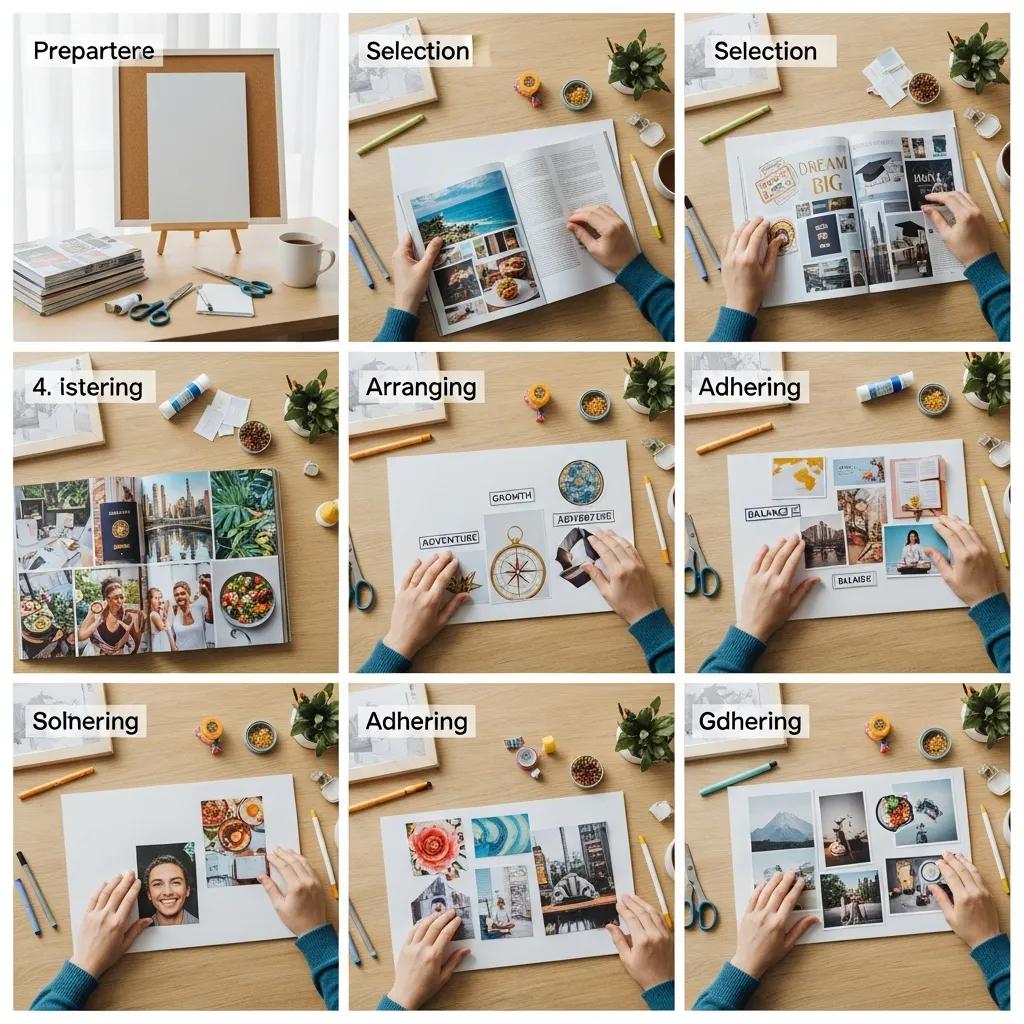
Make an effective vision board by clarifying values and timelines, choosing emotionally resonant images and precise affirmations, and anchoring each visual element with a specific action. Build in phases: start with values and long‑term outcomes, layer in medium‑term milestones, then add immediate next steps beside imagery to close the intention–action gap. Choose the format that fits how you want to interact with cues—physical boards invite touching and marking progress, while digital boards give frequent passive exposure across devices. Phrase affirmations intentionally and pair them with sensory‑rich images to strengthen memory and emotional connection. Below is a practical, step‑by‑step template for creating a board that actually works.
- Clarify Values and Goals: Name 3–5 core values and set time‑bound goals (6–12 months).
- Collect Images and Words: Choose photos and phrases that trigger clear feelings and specific images.
- Anchor Actions: Add one next‑step action to each image that you can complete within seven days.
- Design Rituals: Set a daily micro‑check and a weekly reflection to maintain focus.
- Review and Revise: Schedule quarterly updates so the board keeps pace with shifting priorities.
This sequence turns inspiration into a practical roadmap; the next section explains how affirmations and emotional connection deepen a board’s psychological effect.
Intro to table: The table below highlights essential vision board elements, the purpose each serves, and the psychological reason to include them.
| Element | Purpose | Psychological Rationale |
|---|---|---|
| Image Selection | Elicit a clear emotional response | Sensory‑rich images improve memory encoding and sustained motivation |
| Goal Statements | Provide specificity and timelines | Concrete goals make planning and measurable progress more likely |
| Affirmations | Support adaptive self‑beliefs | Repeated, believable phrasing helps reframe unhelpful thoughts |
| Action Anchors | Map the immediate next physical step | Linking image to action closes the intention–action gap |
| Format Choice | Define your interaction ritual | Medium influences exposure frequency and habit formation |
This EAV‑style view helps you prioritize elements that do the real work—turning visualization into behavior. Next, we look at how affirmations and emotional connection strengthen those mechanisms.
What Are the Essential Steps to Make a Vision Board That Works?
Start by clarifying outcomes and deadlines, then pick images and short goal statements that resonate emotionally, and finally attach an immediate action you can finish within a week. Begin with a focused brainstorming session to surface priorities and write one‑sentence, time‑bound goals like “Secure a project lead role by September.” Choose images that trigger a specific sensory memory or feeling rather than generic stock photos—specificity strengthens neural encoding. Finish by adding a clear next step under each image so the board becomes an accountability tool rather than decorative art. Small, regular revisions keep the board aligned with your changing priorities and sustain forward motion.
How Do Affirmations and Emotional Connection Strengthen Your Vision Board?
Affirmations work by activating adaptive cognitive schemas and countering automatic negative thoughts that derail progress; when paired with emotionally potent images, they form associative links that improve recall and motivation. Use present‑tense, believable statements (for example, “I complete strategic proposals confidently”) and keep each affirmation brief to preserve impact. Deepen emotional connection by adding sensory detail—smells, sounds, textures—or by writing a short narrative of a typical successful day for each goal. Follow affirmations with a brief guided visualization to anchor feeling to phrase and image; this creates a motivational loop that primes action rather than passive fantasizing.
If you’d prefer personalized support, coaching accelerates the process by combining values clarification, strategic mapping, and accountability. Dr. Lena Agree, JD, PsyD and Associates offers coaching that blends attachment‑ and mentalization‑informed approaches to align your board with underlying motivations and barriers, helping you translate imagery into measurable milestones. Sessions focus on clarifying priorities, designing review rituals, and converting each visual element into testable next steps that generate momentum.
How Can Vision Boards Be Tailored for High-Achieving Individuals and Business Owners?
For high‑achievers, tailor a vision board by translating strategic objectives and measurable performance metrics into visual cues and rituals that guide daily choices. Executives and business owners should include leadership narratives, KPI‑aligned imagery (for example, market‑share metaphors), and timelines tied to business cycles. Integrate the board with planning frameworks like OKRs or quarterly planning to connect aspiration to measurable milestones—this supports accountability and team alignment. Entrepreneurs will benefit from visuals that represent scalable systems and customer outcomes, paired with short process maps to reduce ambiguity. The table below contrasts audience types, primary focus areas, and suggested board content.
| Audience Type | Focus Areas | Suggested Board Content |
|---|---|---|
| Executives | Strategic vision, leadership milestones | Images of team impact, KPI callouts, timeline markers |
| Entrepreneurs | Growth, product‑market fit, resilience | Customer outcomes, revenue milestones, iterative test plans |
| High-Achieving Professionals | Skill mastery, career trajectory | Certification icons, portfolio targets, micro‑habit anchors |
Audience‑specific boards emphasize measurable markers and process visuals—useful foundations for coaching and leadership development discussed below.
How Do Vision Boards Support Executive Coaching and Leadership Development?
Vision boards complement executive coaching by clarifying leadership vision, aligning personal and organizational priorities, and providing a visible accountability tool. Coaches help translate broad strategic aims into visual KPIs and concrete next steps so leaders can allocate attention and resources more effectively. One anonymized example: a senior leader who linked quarterly OKRs to weekly delegation practices reported clearer priorities and less decision fatigue after three months of structured review. Coaching packages can include facilitated board sessions, integration with performance metrics, and periodic check‑ins that convert board cues into measurable leadership behaviors.
For leaders seeking bespoke application, Dr. Lena Agree, JD, PsyD and Associates offers concierge coaching that combines personalized sessions with actionable planning. The work aims to increase inner steadiness, clarify strategic focus, and create concrete steps to move leaders out of habitual patterns that block growth.
What Are Vision Board Strategies for Personal Transformation and Mental Wellness?
When used for personal transformation and mental wellness, vision boards are most effective at shaping identity, clarifying values, and scaffolding small, sustainable behavior changes—rather than chasing unrealistic outcomes. Include images that reflect who you want to become and pair them with micro‑behaviors that cultivate that identity—daily mindfulness, short self‑care practices, or incremental skill work. Use affirmations that emphasize process over perfection and include gentle reflection prompts to support self‑compassion when progress stalls. Combining boards with journaling and brief emotion‑regulation exercises strengthens identity work and reduces shame‑driven avoidance. These strategies naturally intersect with therapy when deeper beliefs or trauma patterns limit implementation.
What Are the Common Obstacles to Manifestation and How Can Therapy Help Overcome Them?
Common obstacles to manifestation include limiting beliefs, perfectionism, imposter feelings, avoidance, and emotional blocks that disconnect intention from action. These barriers often show up as automatic negative thoughts that sabotage follow‑through or as avoidance behaviors that prevent engagement with productive steps. Therapy and structured interventions—cognitive restructuring, behavioral activation, and graded exposure—address these mechanisms by testing beliefs, building skill‑based confidence, and creating safe practice for difficult behaviors. Pairing therapeutic techniques with a vision board creates a two‑pronged approach: the board primes goals while therapy targets the internal barriers that stop execution. The section below outlines how cognitive restructuring works in this context and when to seek professional support.
Practical obstacles that commonly block manifestation include:
- Persistent negative self‑talk that undermines confidence and action.
- Perfectionism that delays starting until conditions feel “perfect.”
- Avoidance behaviors and anxiety‑driven procrastination.
- Conflicting values or unclear priorities that diffuse effort.
Addressing these obstacles requires focused interventions that translate insight into consistent behavior; the next section shows how cognitive restructuring is applied.
How Can Cognitive Restructuring Help Shift Limiting Beliefs Around Manifestation?
Cognitive restructuring works by naming automatic negative thoughts tied to goals, weighing evidence for and against those beliefs, and crafting balanced alternatives that support action. A brief worksheet approach: list the automatic thought (for example, “I’ll embarrass myself if I pitch”), collect evidence that supports and contradicts it, and write a balanced statement such as, “I can prepare and learn from each pitch.” Attach that revised affirmation or a small exposure task to the image that previously triggered avoidance. Over repeated cycles, this weakens the link between image and fear and allows the board’s priming to mobilize adaptive behavior. Timelines vary, but measurable gains in confidence and action often appear within weeks of consistent practice.
When Should You Seek Coaching or Therapy to Enhance Your Vision Board Practice?
Consider professional support when internal patterns consistently block progress, when past trauma makes goal pursuit feel unsafe, or when performance pressure impairs everyday functioning despite sustained effort. Coaching is appropriate for performance‑focused goals, accountability, and strategic planning; therapy is recommended when mood disorders, trauma, entrenched negative beliefs, or avoidance significantly interfere with daily life. A combined therapy‑coaching model can be effective: therapy addresses internal barriers while coaching focuses on skills, strategy, and accountability. If persistent avoidance or relational patterns undermine your ability to act on your board, an initial consultation with a qualified clinician‑coach can clarify the best next steps.
Dr. Lena Agree, JD, PsyD and Associates blends therapeutic and coaching approaches for clients seeking an integrated path from vision to sustainable action. Their practice emphasizes attachment‑ and mentalization‑informed methods alongside goal‑focused coaching to help high‑achieving clients translate vision into measurable progress through individualized planning and ongoing accountability.
How Can You Maintain and Maximize the Impact of Your Vision Board Over Time?
Sustaining a vision board’s impact requires predictable review rhythms, simple progress tracking, and tools that make interaction easy. Use a three‑tier review rhythm: daily micro‑checks for motivation, weekly planning to convert insights into next steps, and quarterly overhauls to realign imagery and timelines with changing priorities. Measurement can be as simple as habit trackers attached to images, short reflective prompts, and visible markers of progress. Tools range from sticky notes and progress stickers for physical boards to apps that sync images and reminders for digital boards—choose what reduces friction and encourages regular interaction. Below you’ll find a practical schedule and recommended tools to support ongoing use.
Recommended review schedule and maintenance rituals:
- Daily Micro‑Check: 60 seconds to visualize and name one next step.
- Weekly Reflection: 10–20 minutes to review actions and adjust short‑term plans.
- Quarterly Overhaul: Replace or refresh images and timelines to reflect progress or new priorities.
These rituals provide both repeated exposure and adaptive revision so your board stays actionable rather than decorative. The following section lists tools and resources to support the work.
Intro to tools table: The table below outlines common tools and services that help sustain a vision board practice and how each one supports maintenance and accountability.
| Tool/Resource | Function | Application |
|---|---|---|
| Digital Vision Board Apps | Provide frequent, passive exposure on devices | Use as a screensaver or lock‑screen for repeated priming |
| Physical Materials | Enable tactile interaction and ritual marking | Use stickers and notes to record micro‑wins visibly |
| Workbooks/Templates | Offer structured exercises and prompts | Guide values clarification and action mapping |
| Coaching Check-Ins | Deliver external accountability and strategy | Regular sessions convert board cues into measurable plans |
How Often Should You Review and Update Your Vision Board for Continued Success?
A layered review cadence—daily, weekly, and quarterly—balances frequent cueing with periodic strategic updates. Daily micro‑checks keep the immediate next step salient; weekly reflections translate observations into concrete adjustments and scheduling; quarterly overhauls prune outdated goals and refresh imagery to reflect achieved milestones or new directions. Psychologically, varied review intervals engage different planning systems: daily checks maintain activation, weekly reviews support short‑term organization, and quarterly updates sustain long‑term commitment. Consistent, brief review rituals prevent the board from becoming static and ensure it remains a functional tool.
What Tools and Resources Can Support Your Vision Board Journey?
A compact toolkit of digital and physical resources helps sustain a vision board without adding complexity: a digital app for passive exposure, a dedicated physical board or notebook for tactile marking, a simple workbook for structured reflection, and occasional coaching or therapy for accountability and deeper barriers. For digital users, favor apps that make updating easy and offer scheduled reminders; for tactile users, choose quality materials and a visible location to support ritual. Workbooks and templates structure values clarification and action mapping, while short clinician‑led guided visualizations can enhance daily rituals. If internal blocks persist, integrating coaching or therapy adds personalized strategies and consistent check‑ins.
For readers seeking professional support, downloadable templates and a guided workbook are available through clinician‑led practices, and a consultation with a clinician‑coach can tailor the board to your psychological profile and performance goals. Dr. Lena Agree, JD, PsyD and Associates offers tailored coaching and therapy packages that align vision board practices with attachment‑informed, goal‑focused interventions to help clients sustain progress through personalized accountability and skill building.
- Daily Tools: Digital reminders and a 60‑second visualization script.
- Weekly Tools: Reflection workbook pages and habit trackers.
- Quarterly Tools: A template for strategic overhaul and updated timelines.
These tool tiers balance low‑effort maintenance with meaningful adjustments so your manifestation work stays aligned with evolving goals and life context.
Vision Boards, Optimism, and Hope for Goal Achievement This study examines how vision boards influence goal setting and achievement, focusing on hope and optimism. Many people struggle to sustain motivation and clarity while pursuing goals; optimism is a general expectation of positive outcomes, and hope comprises agency (motivation to pursue goals) and pathways (strategies to reach them). Understanding how these factors interact offers insight into the role of vision boards in goal‑directed behavior. The study involved 59 participants aged 18–35 and used standardized measures—the Adult Hope Scale (AHS) and the Revised Life Orientation Test (LOT‑R). Results showed a positive correlation between optimism and hope, with optimism more strongly tied to agency than to pathway thinking. Exploring the Relationship Between Optimism and Hope Among Individuals Using Vision Boards, K. Kharbanda, 2025
Frequently Asked Questions
1. Can vision boards be used for professional development?
Yes. Vision boards can be a powerful tool for professional growth when you pair visual goals with measurable steps. Use images and short affirmations tied to promotions, skill acquisition, or project milestones, and add timelines and checkpoints to track progress. Framing board items as discrete actions helps translate aspiration into measurable career outcomes.
2. How can I overcome limiting beliefs when using a vision board?
Start with cognitive restructuring: identify the negative thought, test the evidence for and against it, and create a balanced alternative. Attach that new affirmation or a small exposure task to the related image on your board. Repeated practice—brief visualizations and achievable micro‑tasks—helps weaken limiting beliefs and builds the confidence to take consistent action.
3. What types of images work best on a vision board?
Choose images that evoke a specific emotional or sensory response and that reflect both the outcome and the process. Photos that remind you of a feeling, a place, or a particular moment work better than vague stock images. Prefer visuals that connect to lived experience or concrete milestones so they cue practical next steps as well as inspiration.
4. How often should I update my vision board?
Regular updates keep your board relevant. Aim for a quarterly overhaul to refresh big goals and timelines, and make smaller adjustments during weekly reflections to incorporate new insights or wins. Frequent, lightweight reviews prevent your board from becoming stale and help it remain an active planning tool.
5. Can vision boards help with mental wellness?
Absolutely. Used thoughtfully, vision boards can support hope, optimism, and intentional self‑care. Focus on attainable goals, process‑oriented affirmations, and small daily practices that build identity and resilience. When deeper emotional patterns interfere, pairing your board with therapy or guided exercises strengthens both well‑being and goal pursuit.
6. What role does accountability play in using a vision board?
Accountability is vital. Specific, measurable goals plus regular review create responsibility and forward motion. Share your board with a trusted friend, mentor, or coach for external accountability, and schedule brief check‑ins to celebrate progress and recalibrate tasks as needed.
7. How can I integrate my vision board with daily routines?
Place the board where you’ll see it daily or set a digital version as a screensaver. Build short rituals—60‑second morning visualizations or 30‑second evening reflections—and use reminders or apps to prompt review. Small, consistent interactions are more effective than infrequent marathon sessions.
Conclusion
A well‑designed vision board pairs psychological insight with clear, measurable action. By using visual priming, building self‑efficacy through small wins, and maintaining simple review rituals, you can convert aspiration into steady progress. Start small: craft a board that mirrors your values, anchors each image to an achievable next step, and commit to brief, regular review. With consistent practice, your board becomes a practical tool that supports both motivation and measurable outcomes.