
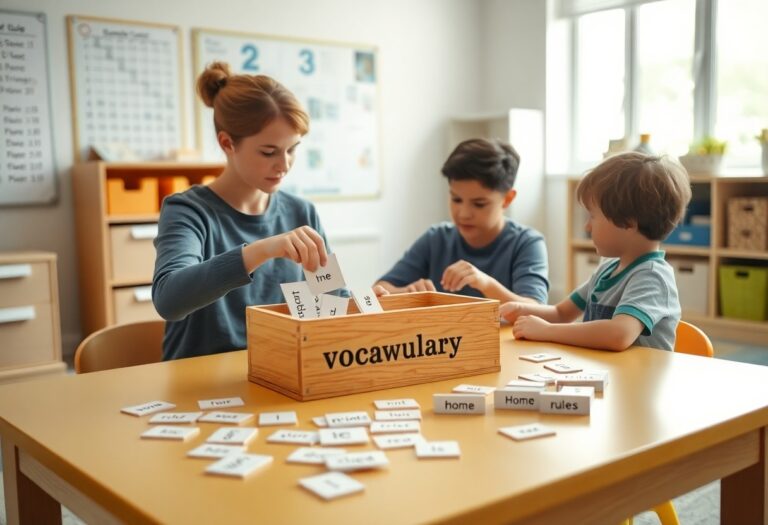
Is There A Hidden Vocabulary Of Growth Waiting Within Child And Teen Therapy?
Growth in therapy reveals subtle language-symbols, metaphors, and gestures-that you can learn to interpret to support emotional development, strengthen communication, and guide interventions for children and teens toward resilience and self-awareness.
Key Takeaways:
- Therapy expands emotional vocabulary-helping children and teens name and regulate feelings, which supports self-awareness and coping.
- Play, art, metaphors and stories act as a hidden lexicon that reveals inner experiences and enables gradual change.
- Caregiver and therapist language scaffolds growth: attuned, validating phrasing turns insights into healthier behaviors and relationships.

Understanding Child and Teen Therapy
Definition and Purpose
Therapy for children and teens targets emotional, behavioral, and social development, helping you identify feelings, build coping skills, and navigate developmental transitions in a way that fits your age and context.
Often clinicians combine individual work with family involvement so you can practice new strategies at home and school, promoting lasting change rather than quick fixes.
Common Therapeutic Approaches
Cognitive behavioral approaches help you notice how thoughts shape emotions and actions, while play and art therapies give you alternative ways to express and process experiences that may be hard to name.
Play-based methods use games, stories, and activities to lower resistance and teach self-regulation, making learning feel natural and engaging for you.
Behavioral and exposure techniques are commonly used for anxiety and conduct concerns, with therapists tailoring reinforcement, practice tasks, and gradual challenges so you can generalize gains across settings.
The Role of the Therapist
You collaborate with a therapist who assesses developmental needs, sets concrete goals with you and caregivers, and adapts methods based on how you respond.
They balance warmth with structure, monitoring progress and adjusting interventions so you experience consistent support and measurable change.
Therapists also apply cultural sensitivity and coordination skills to work with schools and medical providers, advocating for the supports you need while maintaining appropriate boundaries and confidentiality.
The Growth Mindset in Therapy
Concept of Growth Mindset
When you treat abilities as developable rather than fixed, therapy shifts from labeling to learning; you emphasize strategies, practice, and adaptable goals so children see progress as attainable.
This perspective lets you reframe setbacks as feedback, teaching children to experiment and adjust rather than withdraw, which increases engagement in treatment.
Benefits of a Growth Mindset for Children
Adopting a growth mindset in sessions helps you foster persistence, reduce self-blame, and encourage curiosity; children begin to approach challenges with questions instead of fear.
Further benefits include improved academic effort, greater emotional regulation, and increased willingness to seek help because you model and reinforce effortful coping.
Additionally, you may notice long-term gains in self-efficacy and social confidence when praise targets effort and problem-solving rather than innate traits.
Strategies to Foster a Growth Mindset
Therapists guide you to model learning behavior, use process-focused praise, and teach children to set achievable subgoals that build competence through repetition.
Practical strategies for you include coaching reflective questions, practicing mistake-friendly language, and using play or role-play to rehearse adaptive responses.
Finally, you should involve caregivers and teachers in consistent language shifts and plan small, measurable experiments so progress becomes visible and sustainable.
Vocabulary Development in Therapy
Importance of Language in Growth
When you learn precise words for feelings and experiences, you gain a way to notice patterns and make choices instead of reacting on impulse; naming gives you leverage over intensity and direction. Therapists often help you move from vague sensations to specific terms, which shifts private turmoil into a shared, navigable map.
As you expand your emotional and relational vocabulary, you also widen your options for responding and asking for support; words create scripts for new behavior. Therapy lets you test those scripts in safe conversation, so the terms you practice become tools you can use outside the room.
Therapeutic Vocabulary: Key Terms
Language for therapy often includes terms like regulation, boundary, trigger, attachment, and resilience, and you will learn what each means for your life and relationships. Practicing these words helps you identify moments when a pattern starts, so you can intervene earlier and with more clarity.
Terms such as regulation and boundary carry practical consequences: regulation points you to strategies for calming the nervous system, while boundary helps you describe limits without aggression. Using these words lets you coordinate with adults, peers, and therapists to change situations rather than endure them.
Techniques for Expanding Vocabulary
Strategies to build therapeutic vocabulary include reflective labeling, emotion coaching, metaphor work, and narrative reconstruction, all adapted to developmental level so you can grasp and use new terms. Playful methods, like story creation or feeling charts, make learning both accessible and memorable for children and teens.
Practice often involves repeated, spaced exposure: word banks, role-plays, journaling prompts, and linking words to bodily sensations so you can translate feeling into language quickly. Gradual repetition in real contexts helps those new terms become automatic tools in your daily coping and communication.
Identifying Hidden Vocabulary of Growth
Signs of Growth-Promoting Language
Notice how you respond when therapists replace labels with capability phrases-words like “learning,” “practicing,” or “building” invite curiosity and reduce shame, making it easier for you to attempt new behaviors.
Often open-ended questions, reflective summaries, and normalizing statements signal a growth orientation; you feel safer to explore setbacks, experiment, and integrate small successes into your self-view.
The Impact of Positive Reinforcement
When reinforcement focuses on effort and strategy rather than innate traits, you connect actions to outcomes and start expecting improvement, which increases persistence.
Positive feedback that describes what you did (“You asked for help,” “You stayed with it”) encourages repetition more effectively than vague praise, so you practice adaptive skills more often.
Additionally, pairing timely social acknowledgment with opportunities for mastery scaffolds intrinsic motivation, helping you sustain engagement and notice incremental gains.
Exploring Metaphors and Symbols in Therapy
Metaphors let you externalize internal states-calling anxiety a “storm” or strength a “backpack” creates shared images that you can manipulate and reframe during sessions.
Symbols like drawings, objects, or rituals compress complex feelings into tangible forms, enabling you to experiment with new meanings and make abstract changes concrete.
Finally, crafting your own metaphors empowers you to narrate change actively, shifting you from passive recipient to author of adaptive coping strategies.
Integrating Hidden Vocabulary into Practice
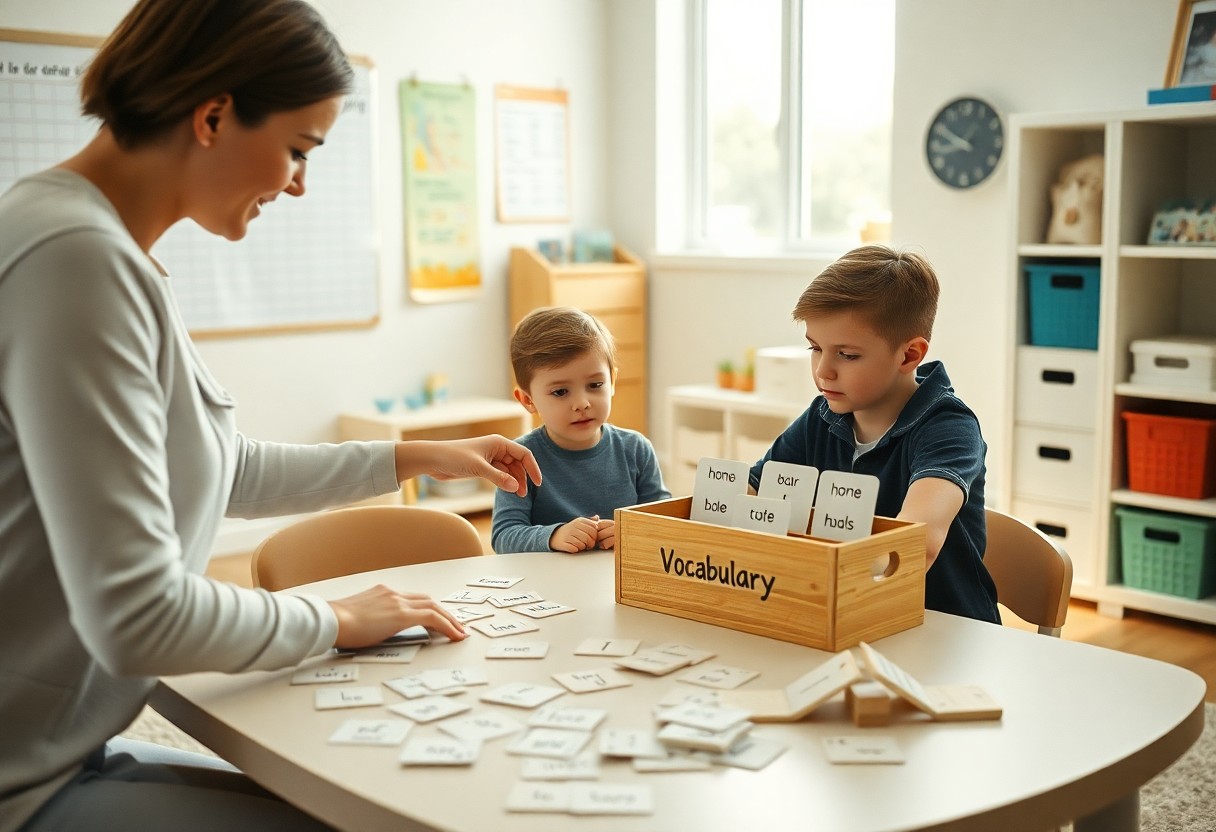
When you translate concepts into sessions, embed targeted words across activities and routines; consult resources like Why the ‘wait and see’ strategy might not help your child … to reinforce the case for active language support.
Training Therapists on Effective Communication
Therapists should rehearse concise phrasing, use consistent labels for feelings and intentions, and build quick prompts you can replicate within short appointments to strengthen client progress.
Strategies for Parents and Caregivers
Parents can integrate hidden vocabulary into daily moments by narrating actions, offering simple emotion words, and prompting choices so you boost comprehension and expression naturally.
Additionally, pair words with gestures or visuals, celebrate approximations, and reduce correction so your child stays motivated to experiment with new language.
Creating a Supportive Environment
Space your home and routines with clear cues and predictable language moments so you create low-pressure opportunities for practice throughout the day.
Moreover, coordinate vocabulary across caregivers and school staff, and prompt gently in varied settings so you help the child generalize words beyond therapy sessions.
Case Studies and Real-Life Applications
- Case 1 – Age 9, selective mutism: 12 sessions over 3 months; verbal initiations rose from 0/day to 5/day (+500%); standardized social anxiety score dropped 28%.
- Case 2 – Age 14, depression with school avoidance: 20 sessions + parent coaching; school attendance improved from 40% to 92% in 4 months; PHQ-A score reduced by 10 points.
- Case 3 – Age 7, ADHD with behavioral outbursts: 16 sessions with behavioral plan; disruptive incidents fell from 8/week to 1/week (-87.5%); teacher-rated focus increased by 35%.
- Case 4 – Age 16, anxiety and panic: 10 CBT sessions; panic frequency decreased from 6/month to 1/month (-83%); functional impairment score improved 45%.
Success Stories from Therapy Sessions
Often you witness small, measurable shifts that compound: a child who avoided eye contact begins initiating conversations after 8 play-based sessions, with social engagement increasing by 60% on observational checklists.
When you involve caregivers in weekly skill coaching, outcomes accelerate; one teen returned to full classroom participation within 10 weeks and reported a 70% reduction in avoidance behaviors on self-report measures.
Analyzing Diverse Demographics
Across socioeconomic backgrounds you find varying access and baseline scores, yet interventions adapted to family routines produced consistent gains: average symptom reduction ranged 30-55% across three community clinics (n=126).
Different cultural contexts require tailoring language and metaphors so you maintain rapport and adherence; dropout rates fell from 28% to 9% when materials were culturally matched.
Additionally you can track subgroup effects: in a sample (n=84) bilingual youths showed a 40% faster improvement in communication goals when sessions integrated native-language components.
Lessons Learned from Case Studies
Data across cases indicate shorter, targeted interventions can yield large functional gains: median treatment length 12 sessions with 48% median symptom reduction and 80% caregiver-reported improvement in daily routines.
Patterns show you achieve best outcomes when combining skill-building, caregiver coaching, and school collaboration; combined approaches produced 25-40% greater gains than single-strategy treatments in matched cohorts.
- Study A – n=60, combined therapy vs. single approach: combined = 52% symptom reduction, single = 28% (12 weeks).
- Study B – n=45, caregiver coaching added: adherence rose from 62% to 91%; relapse at 6 months dropped from 22% to 6%.
- Study C – n=21, school-integration model: academic participation increased 65% and disciplinary incidents decreased 58% in 4 months.
Finally you should translate these lessons into practical protocols: standardize brief outcome metrics, set clear caregiver roles, and schedule inter-system check-ins to replicate the documented gains.
- Replication 1 – Protocol implementation (n=30): standardized metrics increased measurable progress tracking from 40% to 95% fidelity.
- Replication 2 – Community rollout (n=120): average symptom reduction 46% with 12-session model; caregiver satisfaction 4.6/5.
- Replication 3 – Telehealth adaptation (n=50): comparable outcomes to in-person (±5% difference) with 18% higher attendance.
Summing up
Conclusively you can uncover a hidden vocabulary of growth in child and teen therapy: gestures, metaphors, play and silences become signals you learn to read. Therapists guide you to translate these cues into skills, emotional literacy and resilience. By attending to subtle expressions and co-creating language with young clients, you strengthen relationships and support lasting change.
FAQ
Q: What does “hidden vocabulary of growth” mean in child and teen therapy?
A: It refers to the non-obvious ways children and adolescents express inner change-symbols, metaphors, play themes, gestures, body signals and repeated storylines that signal emerging understanding or coping. These elements often replace or precede direct verbal disclosure and, when decoded, reveal shifts in feelings, beliefs, and relational patterns.
Q: How do therapists identify and decode that vocabulary?
A: Therapists build safety, observe patterns across sessions, and attend to recurring images, phrases, toys or behaviors. They use reflective listening, gentle interpretation, symbolic play and art, and track how themes evolve over time to map meaning without forcing adult explanations onto the child.
Q: Which therapy techniques most reliably surface this hidden language?
A: Play-based approaches, art and sandtray work, narrative and story-telling techniques, role-play, and somatic-attuned interventions are effective because they privilege symbolism and nonverbal expression. Interventions that invite metaphor and multi-modal expression increase the chances a child will convey growth through imagery or action rather than direct statements.
Q: What signs at home or school suggest a child is developing this vocabulary?
A: Look for new metaphors or storylines in play, language showing perspective-taking, reduced tantrums with increased problem-solving, shifts in artwork themes, fewer somatic complaints, or spontaneous linking of past events to present feelings. Changes in peer interactions and bedtime narratives often reflect internal shifts as well.
Q: How do cultural and linguistic backgrounds shape the hidden vocabulary?
A: Cultural norms determine which metaphors, emotions and behaviors are available or acceptable, so expressions of growth vary across communities and languages. Therapists should elicit culturally specific meanings, honor bilingual or family narratives, and avoid imposing dominant-culture interpretations when decoding symbols.
Q: How is progress measured when growth is expressed indirectly rather than through direct statements?
A: Progress is tracked through observable changes in themes, emotional range, regulation skills, relational patterns and functional outcomes (school, sleep, peer relations), supplemented by session notes, caregiver reports, and validated behavior or symptom scales when appropriate. Narrative coherence-fewer stuck storylines and more flexible self-descriptions-is a potent qualitative indicator.
Q: When should caregivers pursue specialized therapy to access this hidden vocabulary?
A: Seek professional help if problems persist or worsen, if a child shows regression, trauma symptoms, self-harm or safety risks, significant social withdrawal, or when caregivers cannot elicit the child’s feelings through usual supports. Early, developmentally informed interventions increase the likelihood that therapists can uncover and support the child’s emerging language of growth.