
START YOUR JOURNEY
Today
Once you submit contact form, you’ll receive a response within 24 hours.
Let’s Connect
(248) 219-2548
Lena@Drlenaagree.com

Please note that we do not participate with insurance. See our Rates and Insurance page for more information and pricing.
All sessions with Dr. Agree are billed at the following rates Our associate therapists offer supportive, professional care as part of our team. Sessions are available weekly at the following rates: The first three sessions (initial consultation and two assessment sessions) are 90-minutes each. The duration of later sessions is your choice and can be altered at any time. Stand-alone personality assessments start at $1,200 for a single test; $700 for each additional test. Cost includes: You may schedule the initial meeting without committing to an assessment. The cost is $180 for a 30-minute session, and will be applied to the assessment cost if you decide to proceed. Please contact Dr. Agree with questions, or to get started.Dr. Agree
ASSOCIATE THERAPISTS
Couples Therapy
Personality Assessment
VISIT OUR
Office
Mon – Sun: 10:00 am – 8:30 pm
Note: Flexible Scheduling Available
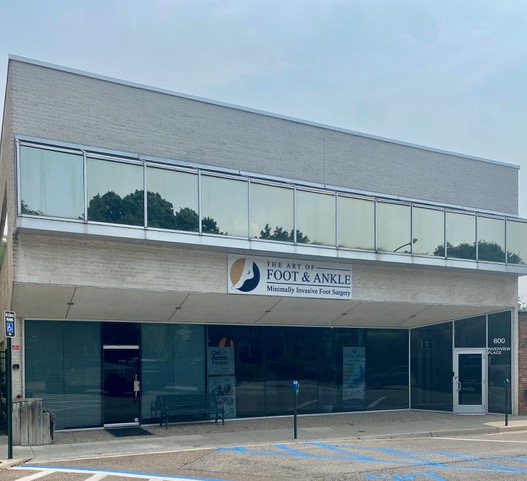
Metered parking is available in front of the building
800 N. Old Woodward Ave. Ste 110
Birmingham, MI 48009
FREQUENTLY ASKED
Questions
Do you wonder if you are simply feeling uncharacteristically emotional because of a specific situation, or if there is a deeper problem? If you have been experiencing 3 or more of the symptoms listed below, and they have been occurring for years, then you may be experiencing symptoms of borderline personality organization. Even if you only experience one or two features, any of them can be extremely disruptive to your life. These include:
- Difficulty managing negative emotions (this may result in impulsive behavior, eg: drugs, spending money, or self-destructive behaviors, eg: cutting, eating, suicide threats or attempts)
- Prolonged anger reactions (eg: holding grudges)
- Difficulty handling distress required to pursue goal-directed behavior
- Feeling overwhelmed when in distress
- Emotion is felt as overly real, and when very intense, it leaves no room for any doubt. How you feel is how it IS, and it is difficult to recognize alternative perspectives. (eg: Feeling like a bad person means I AM a bad person)
- Dramatic mood shifts
- Difficulty staying focused on a task when other thoughts come to mind
- Limited planning or consideration of consequences of actions
- Action without reflection; behaving rashly
- Heightened fear of rejection/abandonment
- Relational avoidance
- Painful intolerance of aloneness
- Hypersensitivity to social situations
- Automatic emotional reactions that are difficult to control
These symptoms can be very painful to live with. They are also difficult to treat, and sometimes even to identify. Many patients with these symptoms have come to Dr. Agree after having been misdiagnosed with depression, anxiety, or bipolar II disorder. They often feel helpless and confused about negative experiences with therapists and psychiatrists who did not seem to understand their condition.
Unfortunately, these symptoms can be quite stubborn. Simply discussing them with a sympathetic listener is not enough. They require a combination of non-directive and directive approaches to help you develop the type of awareness and mentalizing skills you need in order to alter your experience and improve your life.
“I don’t have time” can be an easy rationalization when it feels like you have no time for yourself as it is. However, feeling like you are overwhelmed with obligations, pulled in too many directions, or stretched too thin are often indications that you are working against yourself in some way. You may be doing what you are doing for reasons you are not entirely aware of. People in this position often wait until they have hit a crisis to seek therapy – when it feels more like a necessity than a choice. However, coming in before a crisis hits leaves room for more options, which may result in fewer regrets.
Dr. Agree developed her concierge model with the “on call” option to meet the needs of individuals with significant time constraints through flexible scheduling and video conferencing sessions. Please visit the Rates and Insurance for more information on how she can help make therapy accessible to you.
For therapy to be effective, Dr. Agree believes you should experience at least three key elements:
- You should feel understood;
- You should feel that the content of your sessions is relevant to you and applicable to your life; and
- You should have some means of gauging your progress.
Although your experience in therapy will not be a consistent, linear process, at least one of these three factors should always be satisfied. If ever you feel that this is not the case, you should bring this to Dr. Agree’s attention, and she will address it immediately.
If you are feeling uncomfortable with the idea of going to therapy, Dr. Agree understands. She remembers her own experience many years ago, and never loses sight of how difficult these first encounters can be.
You will find that her easy-going nature and genuine personality will make your first visit a pleasant experience. But if you are “on the fence,” here are a few things to consider:
- Talking about your reluctance to come in can be incredibly relieving. You may be surprised at how much better you feel after discussing just these feelings in an honest way.
- If you are afraid of something you suspect would be beneficial to you, you are always better off pushing through it than giving in. Simple showing up to one appointment, even if you decide not to continue, can be a powerful show of strength to yourself.
- If you don’t like it, you are under no obligation to continue.
Read more about Your First Visit.
Many people who seek therapy with Dr. Agree are looking for real personality change. They wish to improve their subjective experience of themselves and/or their relationships. These individuals come about once a week (sometimes more) for several years. The average duration of therapy for these patients is about 5 years.
Other people come with a narrower range of issues, such as anxiety limited to a specific situation, or the death of a loved one. Those that are otherwise well-adjusted may be in therapy for 6 months to a year.
Dr. Agree does not suggest a duration of therapy because as you discuss and process feelings in one domain, new memories, more feelings, and different perspectives may emerge. How long you choose to stay in therapy truly depends on your own progress, how hard you wish to work, and how well you wish to know yourself.
Dr. Agree will not pressure you to remain in therapy for longer than you intend. She believes therapy involves developing the capacity to make independent, personal choices. She will discuss the issue with you as often as you would like, offer her opinions and the bases for them, but ultimately, it is a very personal decision.
There are certain risks you should be aware of before embarking on therapy. Being cognizant of them will not only help you determine whether therapy is right for you at this time, but also help you understand your emotional reactions during the course of treatment.
During therapy, you may experience emotional discomfort in the process of thinking about, and discussing, events and feelings that are unpleasant. You may notice this from the beginning when you are asked about your family and personal history for the first time. Considering these topics, together with memories that may surface, can stimulate strong feelings, such as fear, guilt, sadness, grief, and anger. As you progress in therapy, you may experience symptoms such as depressive or anxious feelings, changes in your eating and sleeping patterns, and other discomforts, as you work through difficult material.
This is a normal part of therapy, and should be expected. However, these experiences do tend to be temporary and dissipate over time as you talk about them, fully process their meaning, and discover new ways of managing your emotions. Moreover, there is never any pressure to discuss things you are not ready to talk about.
In addition to emotional changes, therapy can also lead to shifts in behaviors. You might outgrow relationships that at one time satisfied needs you no longer have – with partners, family, friends, and others. This process can be distressing. It can also be exciting, because while you may come to enjoy the company of fewer people in your original circle, you are likely to enjoy your own company, and that of different people, more.
Your interests may also evolve. You may feel less fearful of change and seek out new experiences, such as a new job, new home, different hobbies, or new career or life path.
There is always a level of uncertainty in change. It is likely that you will feel worse before you will feel better. It is possible that you will make no significant changes and that you will not get better. It is a serpentine path with no promises. However, you should weigh these risks against the risk of maintaining the path you are currently on. Unfortunately, long patterns of psychological distress do not substantially improve on their own.
Yes, there are alternative treatments to the therapy Dr. Agree provides. First, there are other types of therapy. Dr. Agree provides in-depth therapy for personality development, because she believes it is the most effective means of achieving a genuine, lasting sense of safety, security and strength.
There are many therapies that are short-term treatments aimed at specific symptoms. In fact, most other therapies are shorter-term, and more symptom-focused, than the type of therapy that Dr. Agree practices, largely because insurance companies prefer them. For example, Cognitive Behavioral Therapy (CBT) is a popular type of therapy, favored by insurance companies, because it targets specific symptoms in a measurable way (eg: number of hours sleeping, exercising, socializing, etc., negative v. positive thoughts), and is generally a time-limited treatment.
Dr. Agree believes symptoms that are obvious to us are manifestations of deeper, more complex experiences. She finds that addressing not only the immediate symptoms, but also their meaning and genesis, creates the opportunity for greater substantive change.
In addition to other therapies, medication is also a form of treatment for psychological suffering. Studies have shown that medication alone is generally not very helpful. However, in conjunction with therapy, it has shown to be beneficial for some people. Dr. Agree does not prescribe medication, but is happy to refer you to a psychiatrist for an evaluation.
Feel free to contact her.