

Book Review: Atomic Habits

Comprehensive Book Review of Atomic Habits: Unlocking Habit Stacking and Behavior Change Techniques for Lasting Impact
James Clear’s “Atomic Habits” presents a transformative approach to habit formation, emphasizing the power of small changes that lead to significant results. This comprehensive review delves into the core concepts of the book, exploring how habit stacking and behavior change techniques can create lasting impact in personal development. Readers will learn about the mechanisms behind habit formation, practical strategies for building effective routines, and the psychological principles that underpin successful behavior change. Many individuals struggle with maintaining consistent habits, often feeling overwhelmed by the enormity of their goals. “Atomic Habits” offers a structured solution, guiding readers through the process of incremental improvement. This article will cover the core concepts of habit formation, the technique of habit stacking, recommended behavior change strategies, effective habit tracking methods, and the influence of “Atomic Habits” on therapy and coaching practices.
Indeed, the foundational premise of ‘Atomic Habits’ is echoed in broader psychological literature, highlighting the profound impact of minor adjustments.
Small Changes, Big Impact: Habit Formation & Behavioral Change
By examining the mechanisms through which habits are formed and maintained, this review highlights the profound influence of seemingly minor adjustments on overall well-being and productivity, ultimately leading to significant behavioral changes. Understanding the interplay between habits and behavioral change is crucial for developing effective interventions and fostering sustainable personal growth.
Small changes, big impact:
A mini review of habit formation and behavioral change principles, MS Akash, 2025
What Are the Core Concepts of Atomic Habits and Habit Formation?
The core concepts of “Atomic Habits” revolve around the idea that small, incremental changes can lead to significant improvements over time. James Clear introduces the habit loop, which consists of four stages: cue, craving, response, and reward. This framework explains how habits are formed and maintained, highlighting the importance of understanding each stage to effectively change behavior. By focusing on tiny changes, individuals can create a compounding effect that leads to remarkable results. The book emphasizes that the key to lasting change lies not in radical transformations but in the consistent application of small habits that align with one’s identity and goals.
Further research and practical applications consistently reinforce these principles, demonstrating how understanding the habit loop and implementing strategic changes can lead to lasting behavioral transformation.
Atomic Habits Principles for Lasting Behavior Change
Drawing from James Clear’s Atomic Habits and contemporary psychological studies,it highlights how small, consistent actions can be more impactful and effective than ambitious, short-term goals. Habits develop through repeated actions and reinforcement, eventually becoming automatic, as explained by the habit loop (cue → craving → response → reward).The article outlines strategies like habit stacking, designing supportive environments, and using tracking tools to encourage good habits and reduce harmful ones.
TRANSFORM YOUR LIFE THROUGH EFFECTIVE HABIT FORMATION, 2025
How Does the Habit Loop Explain Behavior Change Stages?
The habit loop is a fundamental concept in understanding behavior change. It consists of four stages: cue, craving, response, and reward. The cue triggers the habit, the craving motivates the desire to perform the habit, the response is the actual habit performed, and the reward reinforces the habit by providing satisfaction. For example, seeing a running shoe (cue) may create a desire to exercise (craving), leading to putting on the shoes and going for a run (response), which results in a sense of accomplishment (reward). Understanding this loop allows individuals to identify and modify their habits effectively, paving the way for sustainable behavior change.
What Are Keystone Habits and Their Role in Small Habits Impact?
Keystone habits are pivotal behaviors that can trigger a chain reaction of positive changes in other areas of life. These habits often have a disproportionate impact on overall behavior and can lead to the development of additional good habits. For instance, regular exercise can lead to healthier eating choices, improved sleep, and increased productivity. By focusing on keystone habits, individuals can create a foundation for broader behavioral change, making it easier to adopt and maintain other positive habits. Clear discusses the concept of keystone habits, originally popularized by Charles Duhigg, and emphasizes the importance of identifying and cultivating these habits to maximize the impact of small changes.
How Does Habit Stacking Enhance Building Routines Effectively?
Habit stacking is a powerful technique introduced by James Clear that involves linking a new habit to an existing one. This method leverages the established routine to make it easier to adopt new behaviors. By stacking a new habit onto a current one, individuals can create a seamless transition that enhances the likelihood of success. For example, if someone already has a habit of brewing coffee in the morning, they might stack a new habit of meditating for two minutes right after the coffee is made. This technique not only simplifies the process of habit formation but also reinforces the existing habit, making it more likely that the new behavior will stick.
What Are Practical Habit Stacking Techniques from Atomic Habits?
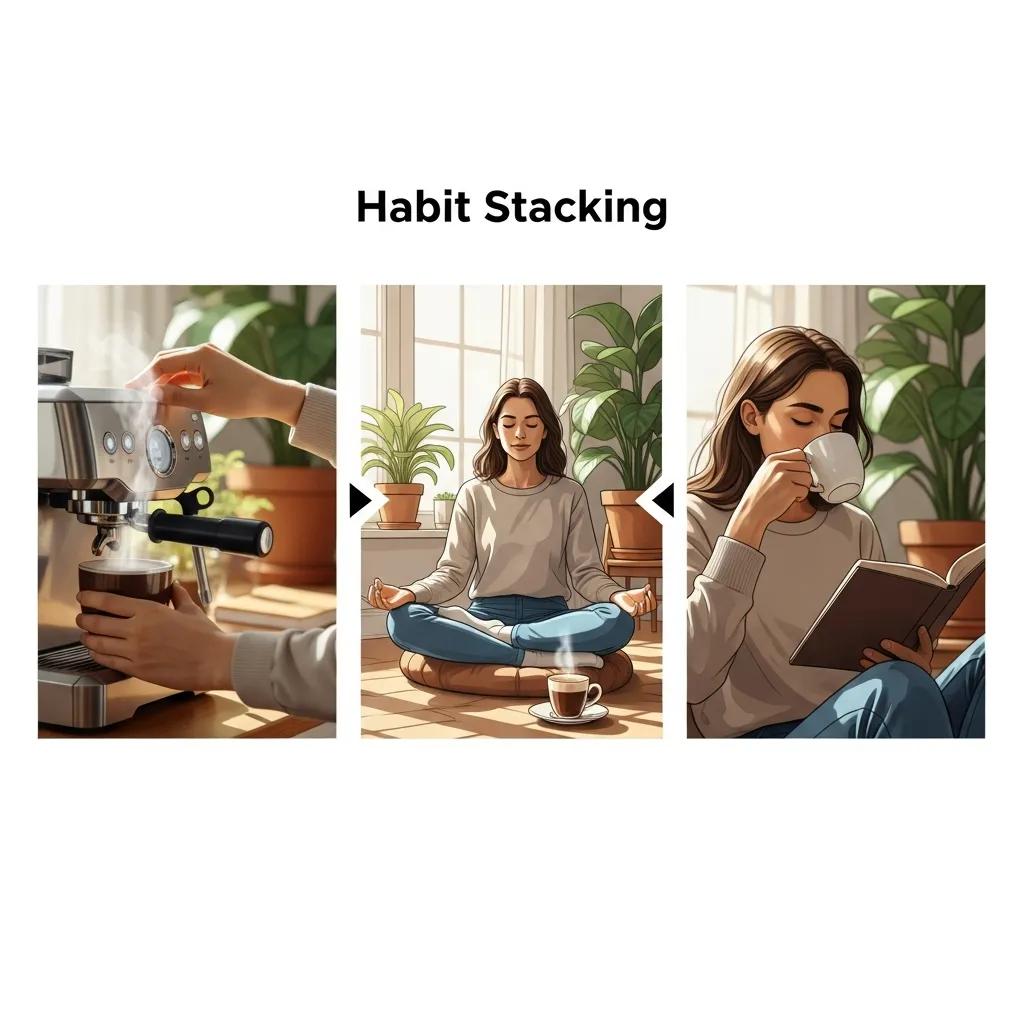
Practical habit stacking techniques from “Atomic Habits” include identifying existing habits and finding logical pairings for new behaviors. One effective method is to use the formula: “After [current habit], I will [new habit].” This clear structure helps individuals visualize the connection between the two habits. For instance, after brushing teeth, one might read a page of a book. Another technique is to start small; beginning with a two-minute version of the new habit can reduce resistance and make it easier to integrate into daily life. By focusing on consistency rather than intensity, individuals can gradually build momentum and reinforce their new habits.
How Can Habit Stacking Be Applied in Daily Life for Sustainable Change?
Habit stacking can be applied in various aspects of daily life to foster sustainable change. For instance, individuals can stack habits related to health, productivity, or personal development. In the morning, one might stack a gratitude practice after making the bed, or incorporate a short workout after a daily coffee break. The key is to identify moments in the day where new habits can fit naturally into existing routines. By consistently applying habit stacking, individuals can create a structured approach to personal growth, making it easier to achieve long-term goals and maintain positive behaviors.
Which Behavior Change Techniques Does Atomic Habits Recommend?
“Atomic Habits” recommends several behavior change techniques that are grounded in psychological principles. These techniques focus on making habits obvious, attractive, easy, and satisfying, which increases the likelihood of adherence. Clear emphasizes the importance of understanding motivation and habit triggers, as these elements play a crucial role in habit formation. By designing environments that support desired behaviors and removing obstacles to change, individuals can create a more conducive atmosphere for habit development.
How Are Motivation and Habit Triggers Utilized in Behavior Change?
Motivation and habit triggers are essential components of behavior change. Motivation refers to the desire to perform a behavior, while triggers are cues that prompt the behavior. Clear suggests that individuals can enhance motivation by associating habits with positive emotions and rewards. For example, celebrating small wins after completing a habit can reinforce the behavior and increase motivation. Additionally, identifying specific triggers that prompt desired behaviors can help individuals create a more structured approach to habit formation. By understanding and manipulating these elements, individuals can effectively change their habits and achieve their goals.
What Therapy and Coaching Strategies Align with Atomic Habits Principles?
Therapy and coaching strategies that align with the principles of “Atomic Habits” often focus on behavior modification and personal development. Techniques such as cognitive-behavioral therapy (CBT) emphasize the connection between thoughts, feelings, and behaviors, making them compatible with habit formation strategies. Coaches may use goal-setting frameworks that incorporate habit stacking and keystone habits to help clients achieve their objectives. By integrating these strategies, therapists and coaches can provide clients with practical tools to facilitate lasting change and support their journey toward personal growth.
What Are Effective Habit Tracking Methods to Measure Progress?

Effective habit tracking methods are crucial for measuring progress and maintaining motivation. Tracking habits allows individuals to visualize their progress, identify patterns, and make necessary adjustments. Various methods can be employed, including digital apps, bullet journals, or simple checklists. The key is to find a tracking method that resonates with the individual and fits seamlessly into their routine.
How Do Visual Tools Like Habit Tracking Charts Support Habit Formation?
Visual tools, such as habit tracking charts, play a significant role in supporting habit formation. These tools provide a clear representation of progress, making it easier to stay accountable and motivated. For instance, a habit tracker can visually display streaks of successful days, reinforcing the desire to maintain consistency. By seeing tangible evidence of progress, individuals are more likely to stay committed to their habits and continue working toward their goals.
What Role Does Measurement Play in Sustaining Behavior Change?
Measurement is a critical component of sustaining behavior change. By regularly assessing progress, individuals can identify what works and what needs adjustment. This feedback loop allows for continuous improvement and helps maintain motivation over time. Research shows that individuals who track their habits are more likely to achieve their goals, as measurement provides accountability and reinforces commitment. By incorporating measurement into their habit formation process, individuals can create a sustainable framework for long-term success.
How Has Atomic Habits Influenced Therapy and Coaching Practices?
“Atomic Habits” has significantly influenced therapy and coaching practices by providing a structured framework for understanding behavior change. The principles outlined in the book resonate with various therapeutic approaches, emphasizing the importance of small, incremental changes. Therapists and coaches have integrated these concepts into their practices, helping clients develop effective strategies for personal growth and habit formation.
Beyond therapy and coaching, the framework’s versatility extends to other domains, such as education, where its principles can significantly impact student development.
Applying Atomic Habits for Educational Behavior Change
The aim of this study is to demonstrate how Atomic Habits by James Clear, a bestseller that details the laws of habit, can be applied to teaching and how this application may benefit student motivation, behavior, and outcomes. A qualitative methodology was employed, which consisted of 15 personal interviews with teachers from secondary schools.
Exploring the Integration of Atomic Habits in Pedagogical Frameworks: A Qualitative Analysis of Teachers’ Implementation and Students’ Outcomes, 2025
What Case Studies Demonstrate Success Using Atomic Habits Framework?
Numerous case studies illustrate the success of using the “Atomic Habits” framework in real-life scenarios. For example, individuals who have implemented habit stacking techniques report increased productivity and improved well-being. One case study highlighted a client who successfully adopted a daily exercise routine by stacking it with their morning coffee ritual. This approach not only made the new habit easier to adopt but also led to additional positive changes in their lifestyle. Such success stories underscore the effectiveness of Clear’s principles in facilitating lasting behavior change.
How Does Dr. Lena Agree Incorporate Habit Formation in Coaching Services?
Dr. Lena Agree, JD, PsyD and Associates, incorporates habit formation principles into their coaching services, focusing on behavioral change and personal development. By utilizing techniques from “Atomic Habits,” the practice helps clients identify keystone habits and implement habit stacking strategies to achieve their goals. This multidisciplinary approach ensures that clients receive comprehensive support tailored to their unique needs, fostering sustainable change and personal growth.
What Are Common Questions About Atomic Habits and Habit Formation?
As readers explore “Atomic Habits,” several common questions arise regarding habit formation and its practical applications. Understanding these questions can provide clarity and enhance the effectiveness of the strategies presented in the book.
What Is Habit Stacking and How Does It Work?
Habit stacking is a technique that involves linking a new habit to an existing one, making it easier to adopt new behaviors. By using the formula “After [current habit], I will [new habit],” individuals can create a seamless transition between habits. This method leverages the established routine to enhance the likelihood of success, allowing for gradual integration of new behaviors into daily life.
Can Small Habits Really Lead to Big Changes?
Yes, small habits can lead to significant changes over time. The concept of compounding effects illustrates how tiny improvements accumulate, resulting in substantial progress. Research supports the idea that consistent, small actions can create a ripple effect, leading to transformative outcomes. By focusing on incremental changes, individuals can achieve their long-term goals without feeling overwhelmed by the enormity of the task.
Where Can Readers Find Additional Resources and Support for Atomic Habits?
Readers seeking to deepen their understanding of “Atomic Habits” and habit formation can access a variety of resources and support. These resources can provide additional insights and practical tools for implementing the strategies discussed in the book.
What Structured Data and Tools Enhance Understanding of Atomic Habits?
Structured data and tools, such as habit tracking apps and online courses, can enhance understanding and application of “Atomic Habits” principles. These resources offer interactive ways to engage with the material, allowing individuals to track their progress and learn from their experiences. By utilizing these tools, readers can create a more structured approach to habit formation and personal development.
How to Access Coaching Services Focused on Habit Formation?
To access coaching services focused on habit formation, individuals can reach out to Dr. Lena Agree, JD, PsyD and Associates. The practice specializes in therapy and coaching services that emphasize behavioral change and personal development. By working with experienced professionals, clients can receive tailored support to help them implement the principles of “Atomic Habits” effectively and achieve their personal goals.